





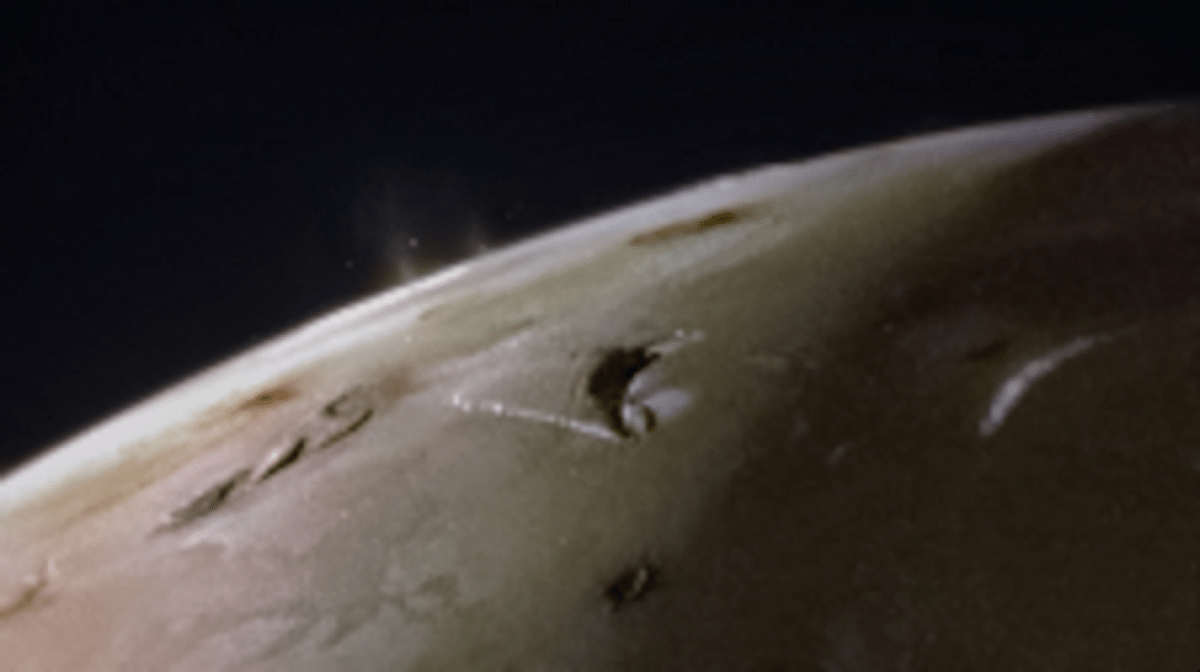
NASA's Juno probe has provided new insights into volcanic activity on Jupiter's moon Io using its infrared instrument JIRAM (Jovian Infrared Auroral Mapper). Researchers like In the journal Nature, Earth and Environment Communications Report: Data suggests widespread lava lakes on Jupiter's moon. The new data provides new insights into the volcanic processes that occur there.
advertisement
During two close flybys in May and October 2023, JIRAM was able to take detailed infrared images of Io’s surface. In May, the probe approached the surface as close as 35,000 kilometers (22,000 miles), and in October, it flew at an altitude of just 13,000 kilometers (8,000 miles). The probe took several hundred images at a time. According to NASA, these bright rings appear around several hot spots. Scientists estimate that about three percent of the moon’s studied surface is covered with lava lakes.
Huge lava lakes where magma rises and falls.
The infrared data also provide clues about processes beneath the surface. The lava lakes appear to be covered by a solid crust that periodically rises and falls. The crust opens up at the edges, exposing the lava beneath. Researchers draw parallels with the lava lakes observed in Hawaii. Io is the most volcanically active world in the solar system. Scientists think Io is being stretched and compressed like an accordion by the massive planet Jupiter and its neighboring moons, which enhances the volcanic activity.
“We now have an idea of what the most common volcanic activity on Io looks like: huge lava lakes with magma rising and falling,” explains Alessandro Mora of the National Institute of Astrophysics in Rome. In a statement by NASAMore data from the latest flights in December 2023 and February 2024 is currently being evaluated.
The probe has been in motion since 2016.
Io, which is slightly larger than Earth's Moon, was observed by Galileo Galilei in 1610. NASA's Voyager 1 spacecraft first recorded a volcanic eruption on Io in 1979. Juno launched toward the Jupiter system in 2016 and was expected to conduct research there through 2018. As things stand, the mission will be extended through 2025.
(Makky)

Sylvia Plath writes for Social Post News, covering news, politics, business, technology, sport, entertainment, and lifestyle. She focuses on clear, reliable reporting and useful information, helping readers stay informed about current events, emerging trends, and stories that matter.




More Stories
Google Pauses AI Image Generation in Google Earth After Less Than 48 Hours
Bumblebees Show Problem-Solving Skills Once Thought Limited to Larger-Brained Animals
Artemis 2’s Orion Heat Shield Faces Critical Test as Astronauts Prepare for Fiery Earth Reentry