





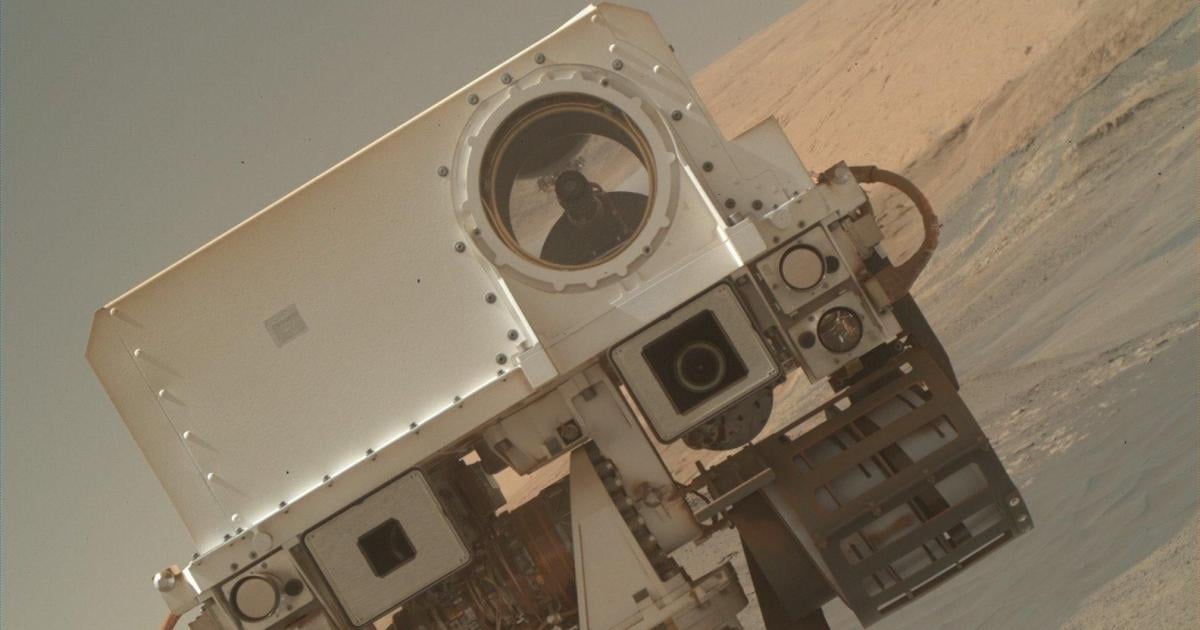
the NASA He posted two videos that look almost artistic. In the Time lapse shots You can see in black and white how a 12-hour day goes on on Mars.
The moving shadows in the video come from the Mars spacecraft curiousity. The video was recorded on November 8, at the beginning of the day Conjunction of Mars and the Sun.
At this point, the Sun is between Earth and Mars. Because the sun's plasma is Radiocommunications Between NASA and Curiosity, the rover will remain stationary for a few weeks to be on the safe side. Instead of sending commands, NASA just periodically surveys Curiosity's status to see if it's still OK.
the HazecamsThe ones used to make the video are used by NASA spacecraft pilots to detect rocks, cliffs, or other obstacles. But since it stays still during pairing anyway, this time you decide to take 12-hour shots.
➤ Read more: The Mars rover Curiosity now also has a secret companion
This experiment was performed for the first time. NASA was actually hoping to capture clouds or dust swirls (small clots) to learn more about the weather on Mars. It didn't work, but it was possible 25 photos A time-lapse video will be created that runs from 5:30 AM to 5:30 PM Mars time.
Because curiosity is not only at the forefront, but also… Ass Has Hazcam, video is also available from this perspective:
Shows the front view Gediz Valles, Mount Sharp Valley. Rear hazard camera is moving towards Storm craters. The rover's right rear wheel can be seen on the left of the image.
According to NASA, the black spot in the rear video was due to cosmic rays hitting the camera sensor. The bright flare and other image artifacts at the end of the video were caused by the rover's power system affecting the image sensor.

Sylvia Plath writes for Social Post News, covering news, politics, business, technology, sport, entertainment, and lifestyle. She focuses on clear, reliable reporting and useful information, helping readers stay informed about current events, emerging trends, and stories that matter.




More Stories
Google Pauses AI Image Generation in Google Earth After Less Than 48 Hours
Bumblebees Show Problem-Solving Skills Once Thought Limited to Larger-Brained Animals
Artemis 2’s Orion Heat Shield Faces Critical Test as Astronauts Prepare for Fiery Earth Reentry