





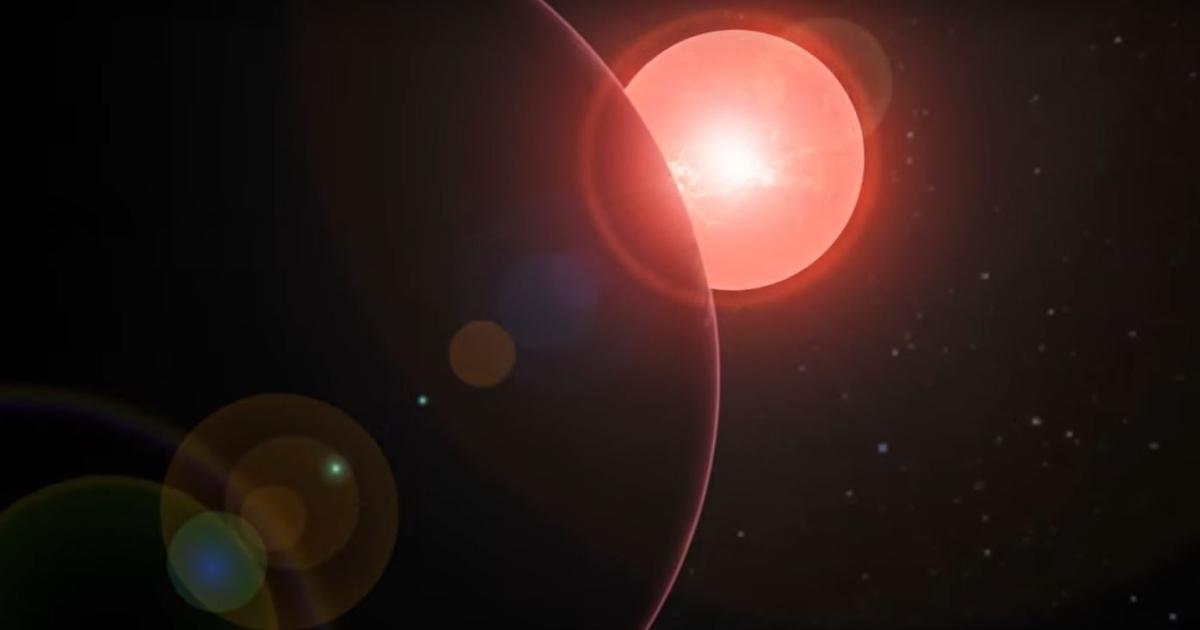
American scientists Pennsylvania State University They have discovered a new planet. This thing is so big that it shouldn’t exist – at least according to him Previous theories About the formation of stars and planets.
The relationship is completely unbelievable
At the end of November, they published a study in the journal Science describing their new discovery. The planet is 13 times the size of Earth. What is amazing is that the star around which the planet revolves is much smaller than our sun Star mass 9 times smaller than the sun.
➤ Read more: Planet 9 could be a wandering black hole
A special tool for dwarf stars
This discovery contradicts previous theories about… Planet formation About smaller stars. The planet they found is simply too big.
The researchers discovered the new giant planet, which they named “LHS 3154B“It is called, with a special tool called SpectrometerWhich was developed by scientists at the university and can detect even the coldest and smallest suns outside our solar system.
This is how stars are formed, or not?
New stars They arise from large clouds of gas and dust. Of material things remains New planets could then appear. However, this theory does not fit at all with the newly discovered constellation of stellar planets: how could such a large planet arise from the remains of such a small star?
“This discovery highlights how little we know about the universe,” he said. Suvrath Mahadevanan astronomer and co-author of the study In a press release. “But it’s out there, and now we need to reconsider our understanding of how planets and stars form,” he says.

Sylvia Plath writes for Social Post News, covering news, politics, business, technology, sport, entertainment, and lifestyle. She focuses on clear, reliable reporting and useful information, helping readers stay informed about current events, emerging trends, and stories that matter.




More Stories
Google Pauses AI Image Generation in Google Earth After Less Than 48 Hours
Bumblebees Show Problem-Solving Skills Once Thought Limited to Larger-Brained Animals
Artemis 2’s Orion Heat Shield Faces Critical Test as Astronauts Prepare for Fiery Earth Reentry