





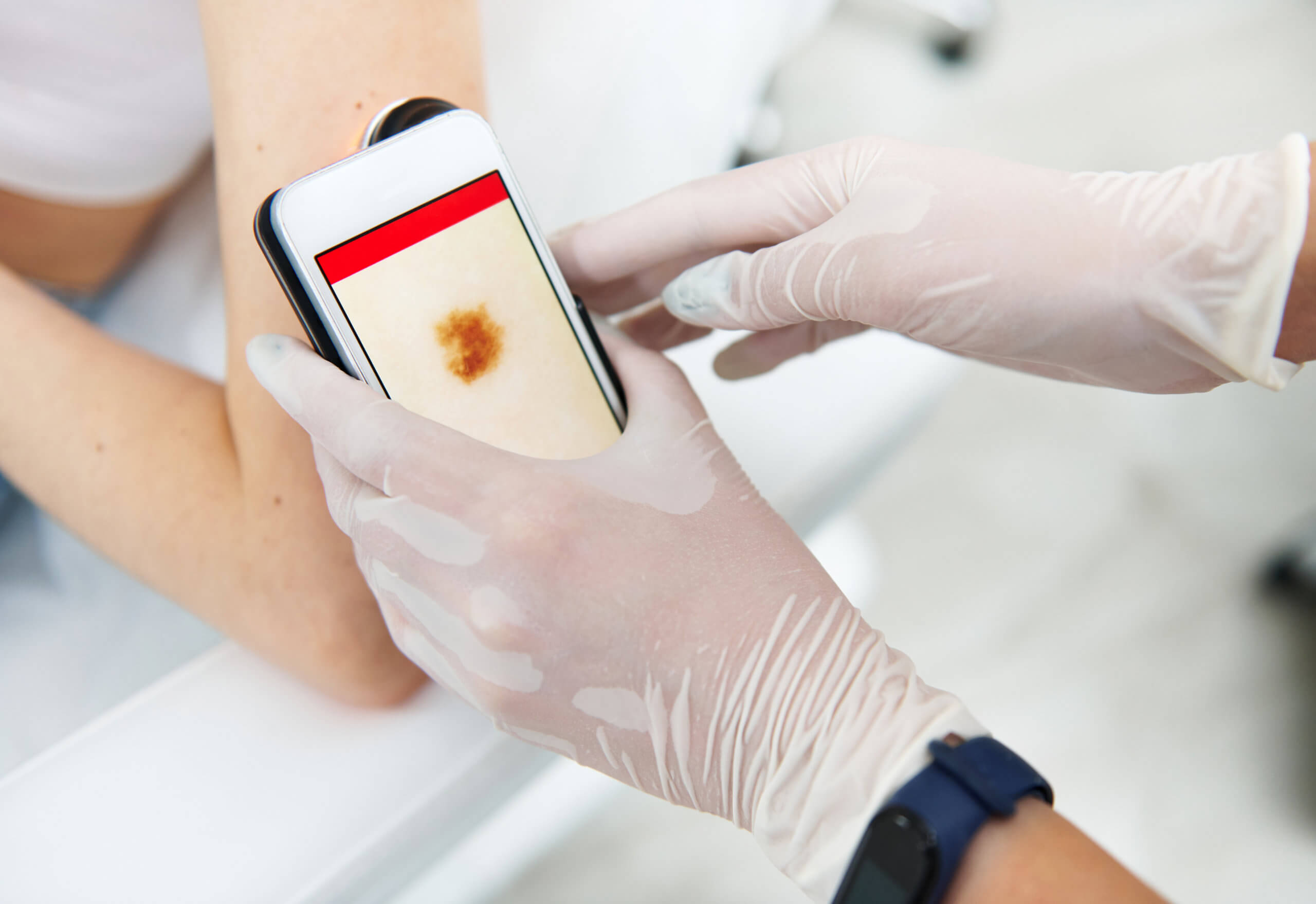
In the field of dermatology, there has been significant progress in self-examination tools in recent years. These tools aim to enable patients to take an active role in monitoring the health of their skin, especially in detecting diseases such as skin cancer, but also other skin problems. However, the increasing availability of such tools raises questions about their effectiveness, potential advantages and disadvantages, and their role in the future of dermatological care.
Taras Gribinets/Adobe Stock
One of the main advantages of self-diagnostic tools is their ability to facilitate early detection of various diseases, not just skin cancer. Dr. Hans explains that early detection can significantly improve treatment outcomes and prognosis for patients. Javiera Pérez Anker, Hospital Clinic of Barcelona. In addition, these tools can increase people’s awareness of their health and encourage them to seek medical care immediately. This proactive approach can help reduce health care costs in the long term. Self-examination tools also have the ability to support remote monitoring, enabling timely intervention and long-term health management. Finally, it provides patients with privacy and dignity as they can perform self-examination discreetly.

Sylvia Plath writes for Social Post News, covering news, politics, business, technology, sport, entertainment, and lifestyle. She focuses on clear, reliable reporting and useful information, helping readers stay informed about current events, emerging trends, and stories that matter.




More Stories
Google Pauses AI Image Generation in Google Earth After Less Than 48 Hours
Bumblebees Show Problem-Solving Skills Once Thought Limited to Larger-Brained Animals
Artemis 2’s Orion Heat Shield Faces Critical Test as Astronauts Prepare for Fiery Earth Reentry