





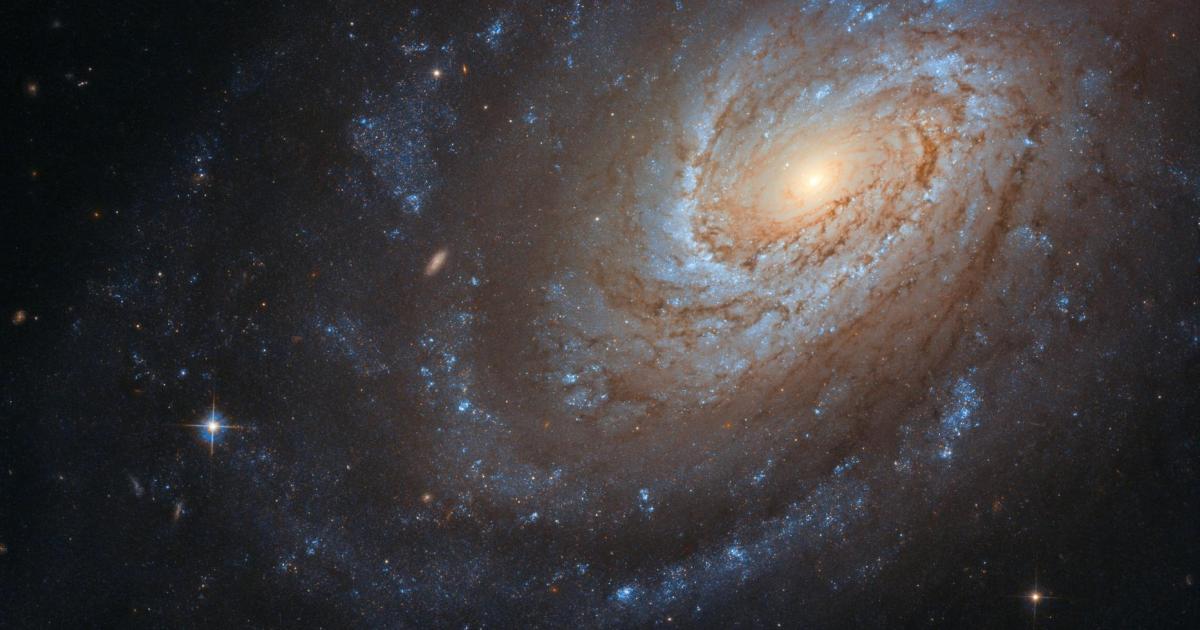
Disk galaxies, such as the Milky Way, have been around much earlier than expected
© European Space Agency/Hubble and NASA, D. Leonard
the James Webb Space Telescope (JWST) He has more than 1000 galaxies He discovered that it resembles our Milky Way Galaxy. They already were From one to 2 billion years ago It was formed after the Big Bang, which contradicts popular theories.
Researchers previously assumed that more mature disk and spiral galaxies appeared later. The first star clusters were initially transformed into irregular dwarf galaxies. And then these merged with each other, which is what… 10 billion years After the Big Bang, the development of more mature galaxies such as the Milky Way was favored.
➤ Read more: It’s official: This is one of the oldest known galaxies
10 times more common
Investigations with Hubble telescope This theory appears to be confirmed. They point out that disc galaxies only formed when the universe was at least 6 billion years old.
According to the author of the study Leonardo Ferreira from the University of Victoria in Canada hypothesized that this was due to the turbulent period after the Big Bang. Models indicate that the many violent collisions between galaxies did not allow spiral galaxies to form. Because the arms of these spiral galaxies are quite “fragile”.
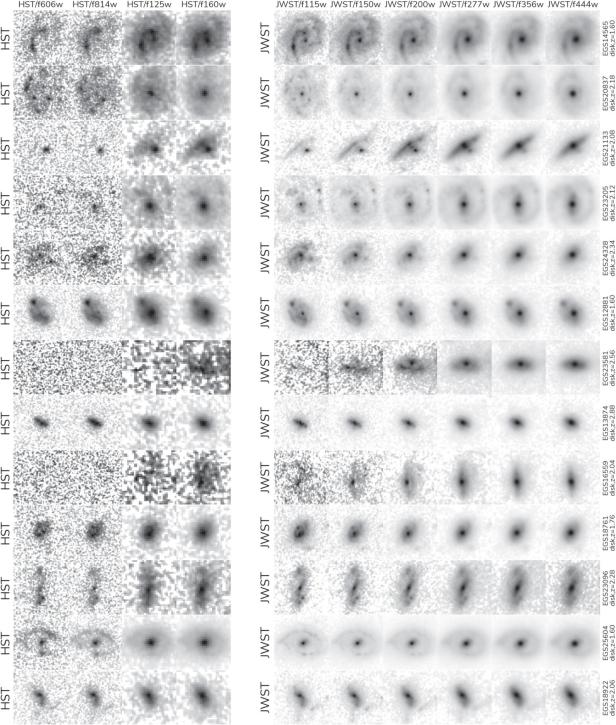
Comparison of Hubble and JWST images
© The Astrophysical Journal (2023)
The results of the new study now indicate that disk galaxies were ten times more common in the early universe than previously thought. With the help of the James Webb Space Telescope, which has a higher resolution than Hubble, researchers were able to do this 9 to 13 billion years ago Look at the past. According to popular calculations, the universe is 13.8 billion years old.
Of the 3956 galaxies discovered 1,672 Fully formed spiral or disk galaxies such as our own. These actually existed when the universe was only a few billion years old.
Reconsidering theories of galactic evolution
“These new JWST results push the time at which these Milky Way-like galaxies form to roughly the beginning of the universe,” says the co-author. Christopher Conselici From the University of Manchester.
This would change the entire understanding of how galaxies form, and previous theories would now have to be revised. The mystery surrounding the formation of the first galaxies after the Big Bang has not yet been solved.
The study was conducted in Astrophysical Journal published.

William Faulkner writes for Social Post News, covering news, politics, business, technology, sport, entertainment, and lifestyle. He focuses on clear, reliable reporting and useful information, helping readers stay informed about current events, emerging trends, and stories that matter.




More Stories
Google Gemini Downgrade Draws Criticism as Survey Shows Users Oppose New AI Restrictions
Google Gemini Expands Connected Apps With Adobe, Airtable, Peloton and More
OpenRGB 1.0 Expands Open-Source RGB Control Across Windows, Linux and macOS