





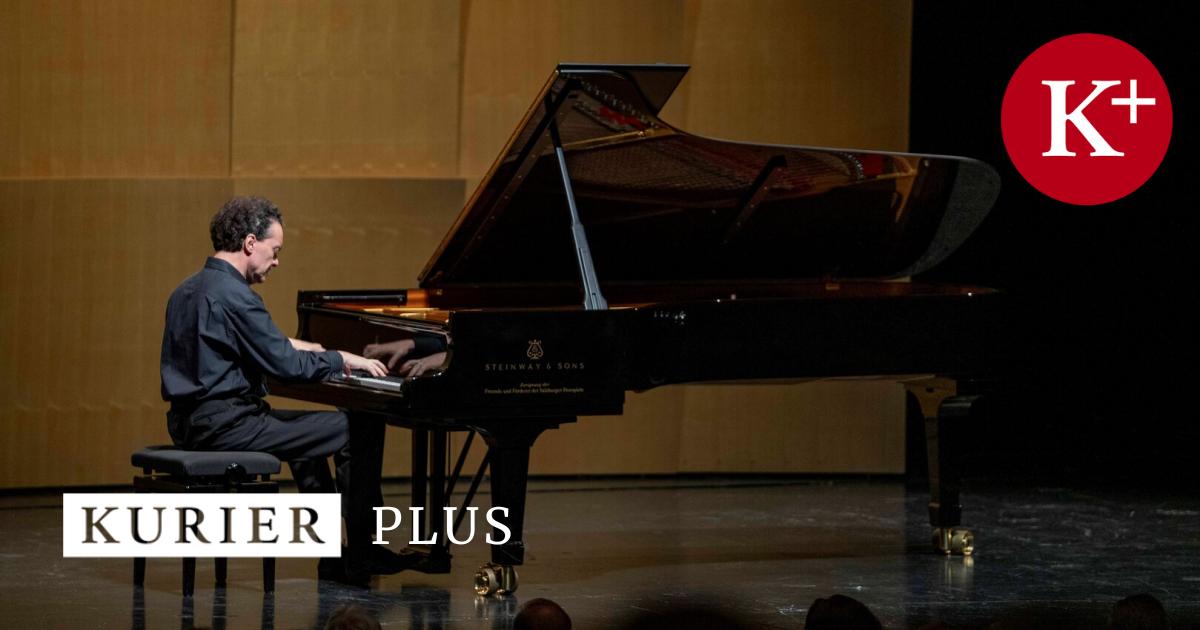
Here is a musician who presents his view of this work. Radical, uncompromising, he gives meaning to every chord and every note, and above all, he takes the composer's instructions to “express” literally. In the second movement he uses a rapid and astonishing delivery. He interprets the “sweetness” with captivating tenderness and always brings to mind Schubert.
With Frédéric Chopin he changed his musical language. This is clearly where he is at home. In the Nocturne in F sharp minor, Op. 48/2, he carefully emphasizes every note. Then there is the exciting Fantasy in F minor, Op. 49, where he emphasizes the darkness of this composition, which he walks through as if with heavy steps. With a kind of unearthly intensity, he repeatedly makes the sounds rise, then returns to a strange fragility.
In Johannes Brahms's “Four Poems”, Op. 10, based on a horror story, Kissin emphasizes the ghostly drama with intensity. In Sergei Prokofiev's Second Piano Sonata in D Minor, Op. 14, he displays his virtuosity with astonishing fury and sends the audience into ecstasy. The audience applauds his three encores, Chopin, Prokofiev and Brahms's waltz, which invites you to immerse yourself.

Stephen King writes for Social Post News, covering news, politics, business, technology, sport, entertainment, and lifestyle. He focuses on clear, reliable reporting and useful information, helping readers stay informed about current events, emerging trends, and stories that matter.




More Stories
Fate/EXTRA Record Sets January 2027 Release for PS5, Switch 2, PS4, Switch and PC
Donnie Darko Sequel Book ‘The Philosophy of Time Travel’ Set for 2026 Release
‘Summer House’ Became an Unexpected Emotional Outlet for Fans This Season