





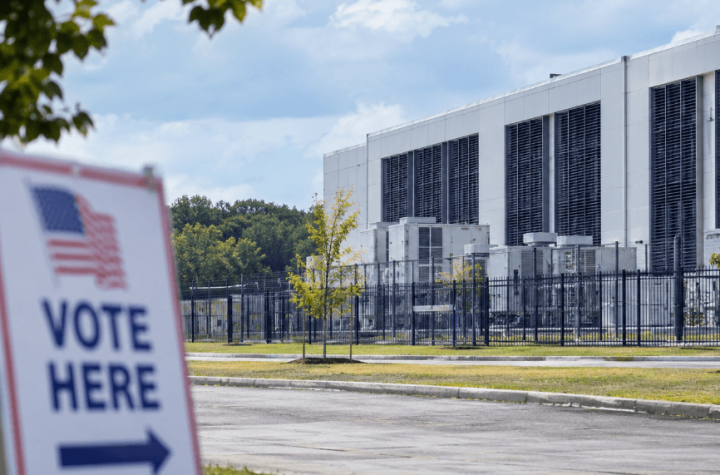
American voters delivered a strong message against the rapid expansion of artificial intelligence data centers in the 2026 midterm elections, rejecting numerous development proposals and voting out several politicians who supported large-scale projects.
The results highlight growing public concern over electricity costs, environmental impacts, water consumption and the strain that massive computing facilities can place on local communities.
Voters Reject Data Center Projects Across 13 States
Data center development emerged as a significant issue in more than 40 election contests across 13 states on November 3.
According to results compiled by Data Centers on the Ballot and reported by 404 Media, voters rejected data center-related proposals in at least 38 contests, with additional results still being counted.
Six cities approved outright bans on data centers, while 12 communities adopted restrictions on the amount of electricity these facilities can consume.
The election results also reflected opposition to elected officials who had supported major data center developments, suggesting that concerns about AI infrastructure are increasingly influencing local and statewide politics.
Texas Governor Greg Abbott Defeated Amid Data Center Controversy
One of the most prominent election outcomes occurred in Texas, where Republican Gov. Greg Abbott lost his bid for a fourth term to Democratic challenger Gina Hinojosa.
Texas has become a major destination for artificial intelligence infrastructure investment, with more than 300 operational data centers and plans for hundreds of additional facilities.
Abbott had strongly promoted the state’s role in AI development.
“Texas is the epicenter of AI development,” Abbott said during a 2025 news conference alongside Google CEO Sundar Pichai. “We must ensure that America remains at the forefront of the AI revolution, and Texas is the place where that can happen.”
According to reporting cited by 404 Media, Abbott subsequently received more than $9 million in political contributions from donors connected to the data center industry.
As public opposition intensified, Abbott announced a pause on new projects. However, state regulators reportedly continued approving developments despite the announcement.
Hinojosa made Abbott’s support for data centers a central campaign issue, repeatedly highlighting his previous statements about expanding AI infrastructure.
She defeated Abbott by more than 700,000 votes, according to the reported election results.
Local Elections Show Growing Opposition to Hyperscale Facilities
Resistance to data center construction extended beyond Texas, with several communities voting against projects or removing officials associated with their approval.
In Burgin, Kentucky, mayoral candidate George Hensley lost to an anti-data center write-in challenger after supporting a hyperscale development.
Hensley was the only candidate whose name appeared on the ballot.
In Emporia, Kansas, voters approved a ban on high-impact data centers. The city had previously attracted attention after police arrested a schoolteacher for clapping during a public meeting concerning a proposed facility.
Meanwhile, voters in Yukon, Oklahoma, recalled their mayor following controversy surrounding his support for a hyperscale data center project.
Electricity Costs and Environmental Concerns Drive Opposition
The election outcomes reflect broader questions about whether communities receive sufficient economic benefits from hosting large computing facilities.
AI data centers require substantial electricity to operate servers, cooling systems and other infrastructure. Large developments can also increase demand for water, land and upgrades to regional power grids.
Critics argue that these requirements could increase utility costs for residents and businesses while placing additional pressure on local resources.
Supporters of data center development, meanwhile, point to construction employment, investment, tax revenue and the infrastructure needed to support America’s growing digital economy.
The election results suggest that many voters remain unconvinced that those potential benefits outweigh the costs.
Local Officials Say Election Results Send a Clear Message
Michael Whitesides, deputy communications director for Local Progress, a national network of local elected officials, said the midterm results demonstrated widespread frustration with the expansion of AI infrastructure.
“These midterms sent a clear message — people don’t want to see data centers in their backyards,” Whitesides told 404 Media.
“Across the country, people do not see the promised benefit of these data centers, and the AI they power, playing out in their daily lives. They’re seeing basic goods and services get more expensive while these billionaire backed monstrosities take up space in their community, poison their air, and drive up their utility bills.”
Local Progress has increasingly focused on the effects of large-scale data center development as communities across the United States debate new construction proposals.
What the Election Results Mean for AI Infrastructure
The opposition presents a growing challenge for technology companies seeking to expand computing capacity to support artificial intelligence services.
Although demand for AI infrastructure continues to rise, developers may face stricter zoning requirements, electricity consumption limits and greater scrutiny from local governments.
The 2026 midterm election results indicate that data center expansion is becoming an important political issue in communities nationwide.
As technology companies pursue additional AI investments, public acceptance, electricity affordability and environmental safeguards could play an increasingly significant role in determining where new facilities are built.

William Faulkner writes for Social Post News, covering news, politics, business, technology, sport, entertainment, and lifestyle. He focuses on clear, reliable reporting and useful information, helping readers stay informed about current events, emerging trends, and stories that matter.



More Stories
French Supermarket Cyberattack Disrupts Refrigeration Systems at More Than 350 Stores
Google Takes AI Data Center Race Into Space With Project Suncatcher
Tesla Cybercab Launch Raises Regulatory, Financial and Competitive Concerns