





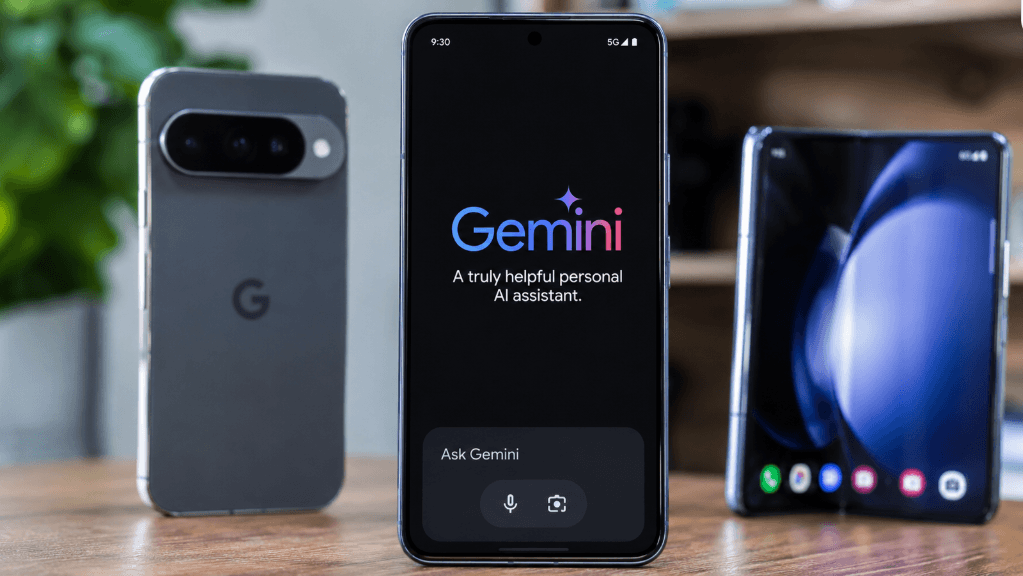
New AI Platform Sets High Hardware Standards for Android Devices
Google’s latest push into advanced artificial intelligence on Android could leave many recent flagship smartphones unable to access its newest features. The company this week introduced “Gemini Intelligence,” a new branding umbrella for premium AI-powered experiences on Android devices, but the technical requirements appear far stricter than many users expected.
According to Google’s published specifications, several high-end phones released as recently as 2025 — including the Pixel 9 lineup and Samsung’s Galaxy Z Fold 7 — may not fully support the platform because they lack one key component: compatibility with Gemini Nano v3.
The move signals Google’s growing emphasis on on-device AI processing as competition intensifies among major tech companies developing AI tools for smartphones.
What Is Gemini Intelligence?
Gemini Intelligence is Google’s new branding for a collection of advanced AI capabilities designed for premium Android devices. The platform includes upgraded productivity and personalization features such as:
AI-Powered Autofill and Smarter Voice Input
Among the headline features are more advanced autofill suggestions and an upgraded version of Gboard voice typing known internally as “Rambler.” Google says the technology is designed to improve conversational speech recognition and contextual understanding.
Dynamic User Interface Features
The platform also introduces generative UI tools, including “Create My Widget,” which allows users to build custom widgets through AI-assisted prompts and automation.
These features are part of Google’s broader effort to integrate generative AI directly into Android rather than relying entirely on cloud-based processing.
Google’s Hardware Requirements Are Steep
Google outlined the minimum specifications for Gemini Intelligence in a footnote on its official product documentation, and the standards effectively place the feature set in the ultra-premium smartphone category.
To qualify, devices must include:
- A flagship-level processor
- At least 12GB of RAM
- Support for AI Core and Gemini Nano v3 or higher
- A minimum of five Android OS upgrades
- At least six years of security updates
- Device quality benchmarks related to stability and crash rates
The RAM requirement alone is notable in a market where many mainstream Android phones still ship with 8GB of memory.
Gemini Nano v3 Becomes a Major Dividing Line
The most important requirement appears to be support for Gemini Nano v3, Google’s latest on-device AI model architecture.
A Google developer support page lists the devices currently compatible with Nano v3, and the list is heavily weighted toward 2026 smartphone releases.
Android Phones Compatible With Gemini Nano v3
Devices currently listed with Gemini Nano v3 support include:
- Pixel 10
- Pixel 10 Pro
- Pixel 10 Pro XL
- Pixel 10 Pro Fold
Samsung
- Galaxy S26
- Galaxy S26+
- Galaxy S26 Ultra
Other Android Brands
- Honor Magic 8 Pro
- iQOO 15
- OnePlus 15 and OnePlus 15R
- Oppo Find X9 series
- Realme GT 7T
- Vivo X200 and X300 series
The list suggests that many manufacturers are reserving Nano v3 for their newest AI-focused flagship devices.
Pixel 9 and Galaxy Z Fold 7 May Miss Out
Several recent premium smartphones currently support only Gemini Nano v2, including:
- Pixel 9
- Pixel 9 Pro
- Pixel 9 Pro XL
- Pixel 9 Pro Fold
Samsung
- Galaxy Z Fold 7
- Galaxy Z TriFold
Other Devices
- OnePlus 13 series
- Xiaomi 15 lineup
- Motorola Razr Ultra 2025
- Oppo Find N5
- POCO F8 Ultra and related models
That creates uncertainty for consumers who purchased expensive flagship devices expecting long-term AI feature support.
Questions Remain About Future Compatibility
Google’s documentation specifically references Gemini Nano Prompt API support rather than confirming complete incompatibility with Gemini Intelligence itself. That distinction leaves open the possibility that some devices could gain support through future software updates.
However, Google has not clarified whether Nano v2 devices can eventually be upgraded to meet Gemini Intelligence standards.
The uncertainty has already sparked debate among Android users and developers over whether the restrictions are driven by genuine hardware limitations or strategic product positioning.
RAM Requirements Raise Questions About Future Pixel Devices
The 12GB RAM requirement also adds confusion surrounding reports that Google’s upcoming base Pixel 11 model could reduce memory to 8GB.
If those leaks are accurate, the lower-end Pixel 11 may not qualify for the full Gemini Intelligence experience despite being part of Google’s next-generation smartphone lineup.
That would represent a notable shift in the Android ecosystem, where AI capabilities may increasingly depend on premium hardware tiers rather than software updates alone.
Google and Samsung Expected to Lead Rollout
Google says Gemini Intelligence will debut first on Pixel and Samsung Galaxy devices later this year. Industry reports suggest Samsung’s upcoming Galaxy Z Fold 8 could become the first smartphone to launch with the full feature suite enabled out of the box.
The rollout reflects a broader industry trend as smartphone makers race to position AI as the next major selling point for high-end mobile devices.
For consumers, however, the announcement may also serve as a reminder that the latest flagship phone does not always guarantee access to future AI platforms.

William Faulkner writes for Social Post News, covering news, politics, business, technology, sport, entertainment, and lifestyle. He focuses on clear, reliable reporting and useful information, helping readers stay informed about current events, emerging trends, and stories that matter.



More Stories
Google Gemini Downgrade Draws Criticism as Survey Shows Users Oppose New AI Restrictions
Google Gemini Expands Connected Apps With Adobe, Airtable, Peloton and More
OpenRGB 1.0 Expands Open-Source RGB Control Across Windows, Linux and macOS