





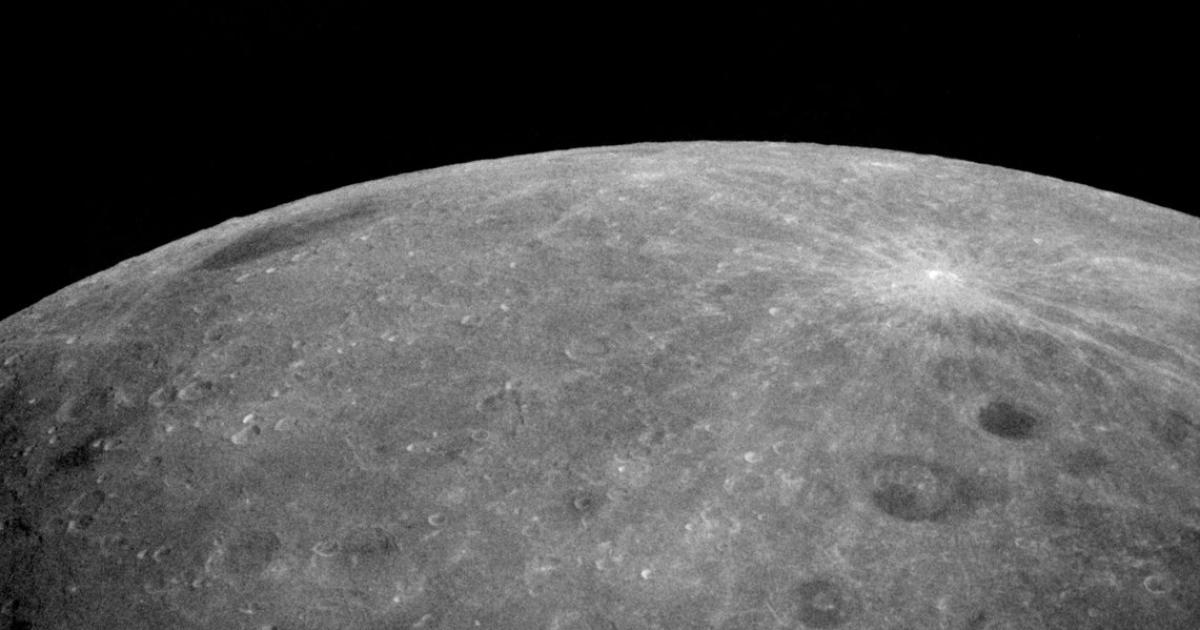
A research team has one on the moon Huge granite formation Discover. This is most likely a deposit Magma cooling Under a volcano – too Batolith named. Specifically, this granite shape remains when the lava cools without erupting. Scientists estimate that the lunar volcano, which is located on the far side of the moon from us, is the last About 3.5 billion years ago was active.
“Every large body of granite we find on Earth has been feeding a chain of volcanoes,” said the study’s author. Matthew Siegler Explained by Southern Methodist University in Texas. According to him, the bathyscaphes are much larger than the volcanoes that feed them at the surface. “The Sierra Nevada Mountains, for example, are a remnant bathtub from a volcanic chain in the western United States that has been around for a long time.”
➤ Read more: The moon should get its own time zone
heat below the surface
The size of the lunar dove, whose diameter is estimated at 50 kilometers unexpected for researchers. In addition, granite is rare on the Moon because some processes are necessary for the formation of granite. Rocks on Earth are formed by water and plate tectonics. However, these two components are missing on the Moon. “If there is no water, extreme conditions are necessary for granite to form,” Siegler says, adding, “So we have a system without water and without plate tectonics, but with granite.”
© Nature / Siegler et al.
Under the lunar volcanic region known as Anomaly of Thorium Comptum Belkovitch Known, an unusual heat source was discovered using microwave frequency data. temperature approx 20 times of the average temperature in the lunar highlands. Compton-Belkovitch volcano lit up on microwaves. This means that it is hot under the surface. So there is an unknown source of heat under the volcano. According to the data, it may be caused by the concentration of radioactive elements.
Formation of the early lunar crust
It is now unclear whether there is enough water on the moon – at least at this point – or whether it is just too hot on the moon. In any case, this discovery will explain how the early lunar crust formed. The study was in Nature magazine published.

William Faulkner writes for Social Post News, covering news, politics, business, technology, sport, entertainment, and lifestyle. He focuses on clear, reliable reporting and useful information, helping readers stay informed about current events, emerging trends, and stories that matter.




More Stories
Google Gemini Downgrade Draws Criticism as Survey Shows Users Oppose New AI Restrictions
Google Gemini Expands Connected Apps With Adobe, Airtable, Peloton and More
OpenRGB 1.0 Expands Open-Source RGB Control Across Windows, Linux and macOS